
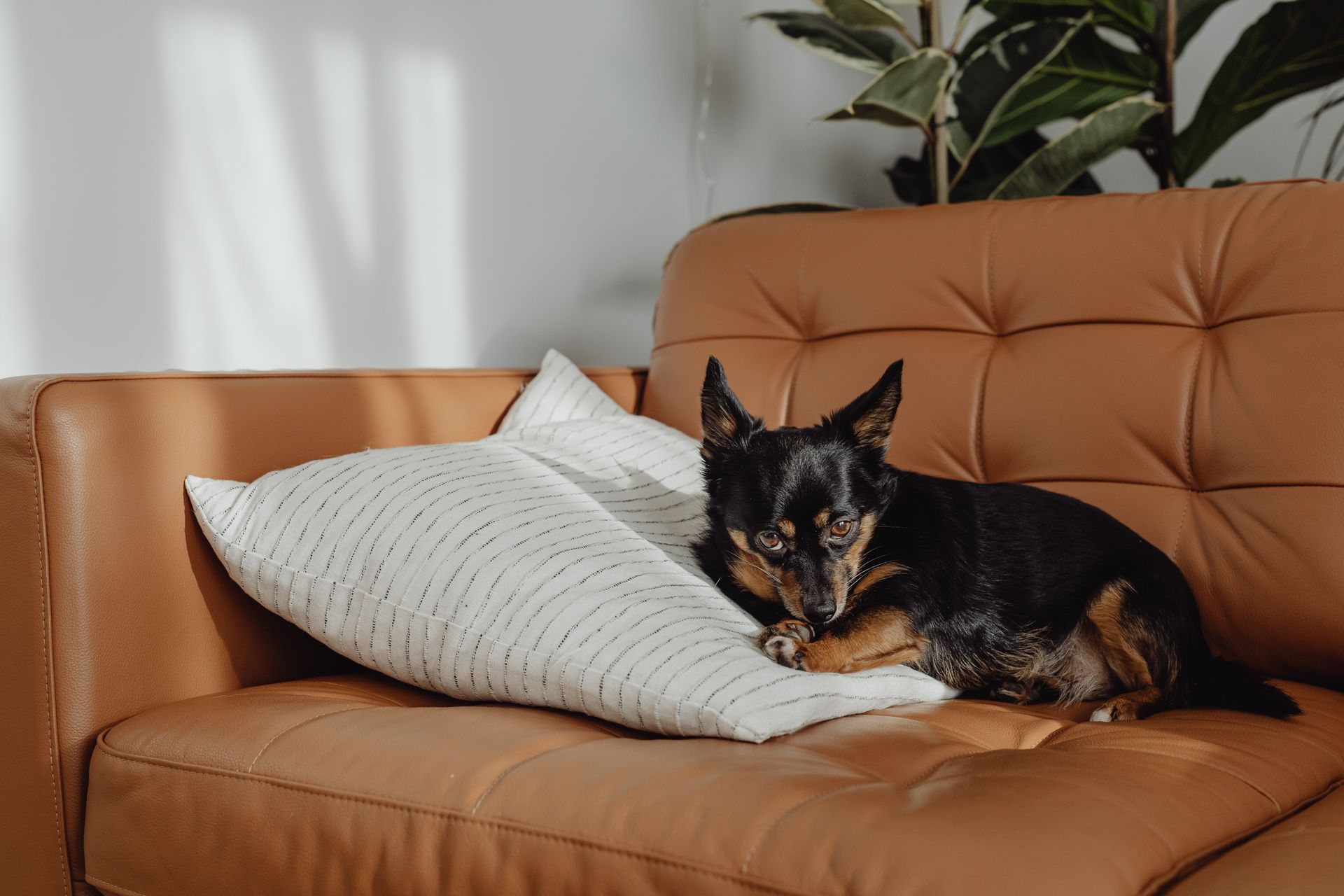
How to Teach a Dog to Settle in a Small Apartment
Living in a small apartment with a dog means you’re in close quarters basically all the time. There’s no sending them to another room to burn off restless energy. There’s no yard to toss them into when they won’t stop pacing. Whatever mood your dog is in, you’re in it with them.
That’s why teaching a dog to settle in a small apartment is one of the most useful things you can do early on. A dog who knows how to switch off and rest on cue makes small space living so much easier. And the good news is it’s a trainable skill, not just a personality trait some dogs are born with.
Here’s how to build it.
What “Settle” Actually Means
Settle isn’t the same as sit or stay. Those are active commands where your dog is holding a position and waiting for a release. Settle is closer to “go be calm over there and actually relax.”
The goal is a dog who can lie down, take a breath, and genuinely switch into a lower gear — not just freeze in a down position while their eyes dart around the room waiting for the next thing.
A dog who can do this on cue is easier to live with in any home. In a small apartment it’s basically a quality-of-life upgrade for everyone.
Start With the Right Setup
Before you start training, make sure your dog has a spot to settle to. This ties back to having a designated place in your apartment that belongs to them, this could be a bed, a mat or a crate with the door open that belongs to them.
The spot matters because you’re teaching the dog to go somewhere specific, not just to calm down in the abstract. “Go to your place” is a clearer signal than “please stop being a lot right now.”
If you haven’t set that up yet, start there. Pick a spot, put a comfortable bed or mat down, and let your dog get used to it for a few days before you start working on settle as a formal skill.
The Basic Method
This doesn’t require anything fancy. You need treats, a mat or bed, and some patience.
Step one: Walk your dog to their spot and wait. When they step onto the mat or bed, mark it (a simple “yes” works fine, or a clicker if you use one) and give them a treat. Do this several times until they’re readily stepping onto the spot when you bring them over.
Step two: Once they’re comfortable going to the spot, start waiting for them to lie down before you mark and treat. Some dogs do this naturally after a few seconds. Others need a little more time. Don’t push them, just wait it out. The moment their elbows hit the mat, mark and treat.
Step three: Start building duration. After they lie down, wait a few seconds before treating. Then a little longer. You’re rewarding them for staying relaxed, not just for hitting the position.
Step four: Add the cue. Once the behavior is reliable, start saying “place” or “settle” right before they go to the spot. Over time they’ll connect the word to the action.
Go slow on the duration piece. Rushing it leads to a dog who lies down, pops back up immediately, and looks at you for a treat. That’s not settle, that’s just a fast down.
Practice When They’re Already Calm
This is the part most people skip. They try to train settle when the dog is wound up and then wonder why it’s not working.
Settle is much easier to build when the dog is already in a lower energy state. After a walk is a good time. After they’ve eaten. In the evening when they naturally start to wind down.
You’re not teaching them to go from zero to settled in one jump. You’re teaching them what settled feels like and putting a word to it. Once the behavior is strong in calm moments, you can start practicing in slightly more stimulating situations and build from there.
What To Do When They Won’t Stay Put
This is where most people get frustrated. The dog goes to the spot, lies down, then gets up and follows you to the kitchen. Or they hear something outside and that’s the end of it.
A few things help here.
First, if they get up, just calmly walk them back to the spot. No frustration, no big reaction. Just back to the mat, wait for the down, treat, and try again. The repetition is the training.
Second, make sure you’re not accidentally releasing them. If you call their name, make eye contact, or move toward them while they’re settled, they’re going to read that as a release signal and get up. If you need to move around your apartment while they’re settling, do it without engaging with them.
Third, check the duration you’re asking for. If your dog can only hold settle for 30 seconds right now, don’t ask for five minutes. Build it up in small jumps.
Build It Into Your Daily Routine
The fastest way to make settle reliable is to practice it in small doses every day rather than in long training sessions once in a while.
A few minutes in the morning while you have coffee. While you’re watching TV in the evening. When you’re working from home and need them to be calm for a bit. These natural moments of low activity are perfect settle practice because the environment is already calm.
Over a few weeks of this, most dogs get pretty good at it. They start defaulting to their spot when the apartment goes quiet instead of roaming around looking for something to do.
It Gets Easier
The first few weeks of building this skill can feel like a lot of back and forth. The dog gets up, you bring them back. They settle for two minutes and then a door slams somewhere in the building and you’re starting over.
Stick with it. Dogs who learn to settle genuinely become easier to live with in small spaces. The hypervigilance that some apartment dogs have (always watching, always waiting for the next thing) tends to ease up when they have a clear routine and a place that signals rest.
It’s one of those things that takes a little time upfront and pays you back every day after that.