Where to Put a Dog Crate in a Small Apartment
The crate itself is usually an easy decision. It’s figuring out where to put a dog crate in a small apartment that trips people up. You drag it home, look around your living room, and suddenly every corner feels wrong. Too close to the door. Too far from everything. Right in the middle of the only open floor space you have.
It’s a real puzzle in a small space, but there’s a logic to it once you know what you’re actually looking for.
What Your Dog Needs From the Spot
Before you start measuring corners, it helps to think about what makes a crate location work for a dog.
Dogs are den animals by nature. They like enclosed, quieter spots where they can see some of what’s going on without being right in the middle of it. A crate shoved in a high-traffic area where people are constantly walking past it is harder for a dog to relax in. So is one that’s completely isolated in a room they’re never in.
The sweet spot is somewhere your dog can hear and partially see household activity without being overstimulated by it. A spot that feels a little tucked away, even if it’s technically in a shared room.
That’s the goal. Now here’s how to find it in a small apartment.
The Living Room Usually Works Best
For most apartment dogs, the living room is the right room. It’s where you spend the most time, which means the dog is near you without being underfoot. It’s usually the largest room in a small apartment, which gives you the most placement options.
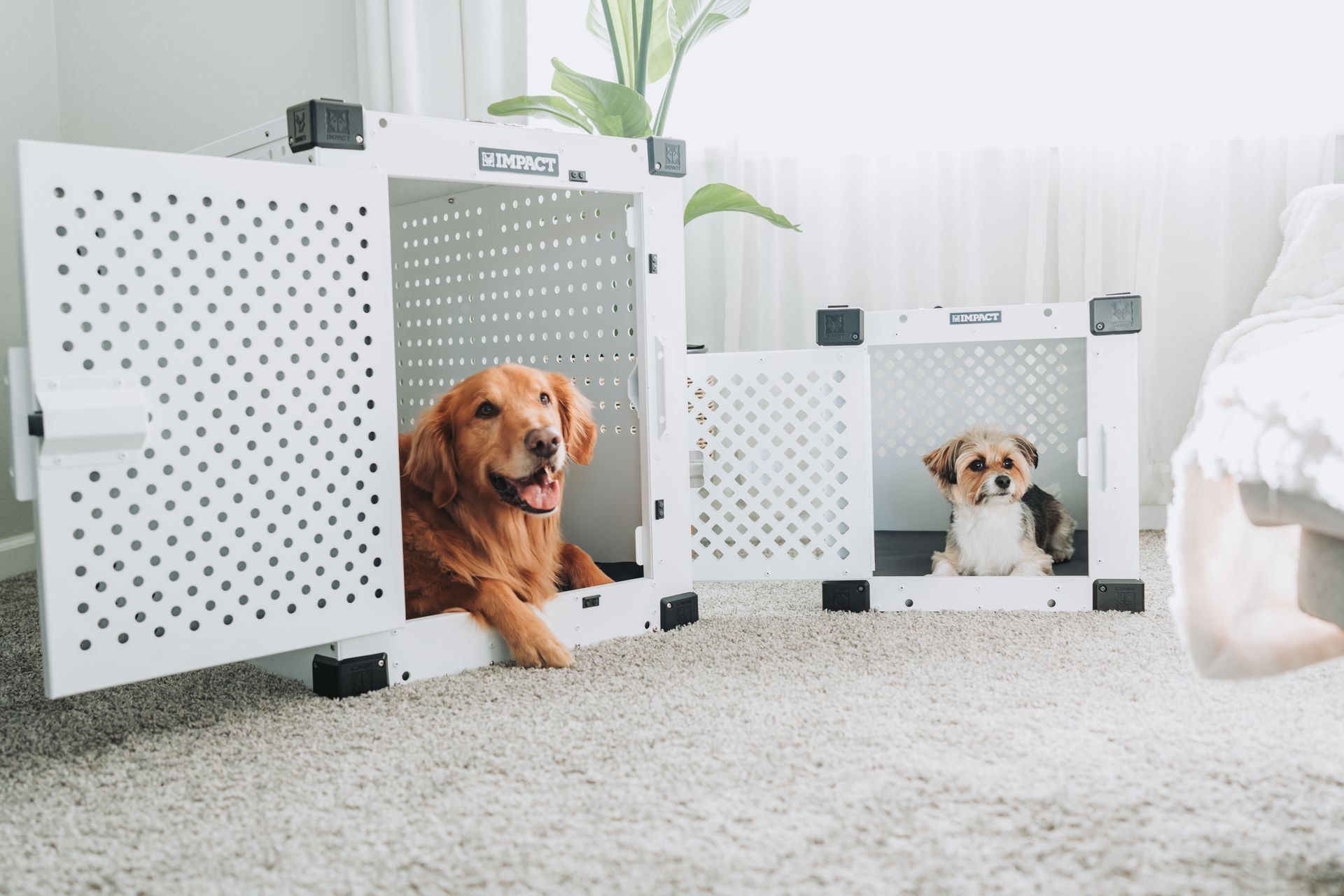
Look for corners first. A crate in a corner has two walls behind it, which naturally gives it that den-like quality. The dog has a clear sightline into the room but feels backed up and secure rather than exposed.
If your living room has a natural alcove, a nook beside a bookshelf, or a spot beside the couch that doesn’t block a walkway, those are all worth considering. The goal is to tuck it in rather than just plop it in the open.
Avoid putting it directly beside the TV if you watch at high volume or directly under a window with a lot of street noise. Both can make it harder for your dog to settle, especially at night.
The Bedroom Is Worth Considering
A lot of apartment owners end up with the crate in the bedroom, especially if the dog sleeps in it at night. This works well for dogs who are more attached or anxious, since being in the same room as you overnight helps them settle.
The downside in a small apartment is that bedrooms are usually the smallest room. A standard crate takes up real floor space, and in a room that’s already tight, that can feel like a lot.
A few things that help: placing the crate at the foot of the bed rather than beside it frees up the walking space on either side. Sliding it partially under a raised bed frame works for smaller crates and keeps the footprint minimal. Some people use a crate that doubles as a piece of furniture. There are end-table style crates that sit beside the bed and don’t look out of place in a bedroom at all.
What to Avoid
A few spots that seem logical but tend not to work well.
Right next to the front door. This puts your dog in the most stimulating spot in the apartment. Every time someone walks past in the hall, every delivery, every neighbor — it all hits the crate first. Dogs who are already alert or reactive have a harder time in this spot.
In a closed-off room they’re never in. Some people put the crate in a spare room or a laundry area to keep it out of the way. If your dog spends time in their crate during the day while you’re home, being completely separated from you makes the crate feel more like a penalty than a den. Not ideal.
Directly in front of a heating or AC vent. Temperature extremes in a crate are uncomfortable and can make it harder for your dog to want to be in there at all.
Make the Spot Feel Like a Den
Once you’ve picked a location, a few small things help the crate feel more settled-in and den-like.
Draping a blanket over the top and sides (leaving the door open) cuts down on visual stimulation and makes the inside feel more enclosed. Most dogs take to a covered crate faster than an open one. Use a blanket that’s washable and not too heavy. You want to make sure there is adequate airflow, just less visual exposure.
Put something in there that smells like you. An old t-shirt, a pillowcase, a small blanket you’ve used. This is especially helpful for dogs who are still getting used to the crate. Familiar scent makes a new spot feel safer faster.
Keep the inside simple. A well-fitted mat or pad, maybe a chew or a Kong if your dog uses them in the crate. You don’t need to fill it with toys. Dogs want the crate to feel like a resting place, not a playpen.
It Might Take Some Adjusting
Don’t stress too much about getting the location perfect on the first try. Most people move the crate at least once before landing on the right spot. You learn a lot by watching how your dog uses it. Do they go in willingly? Do they settle quickly? Do they seem alert or calm when they’re in there?
If your dog is reluctant to use the crate in one spot, moving it to a quieter or more tucked-away location can make a bigger difference than you’d expect. Location affects comfort more than most people realize.
Small apartments don’t give you a lot of options, but they usually give you enough. A little thought about placement goes a long way toward making the crate a spot your dog actually wants to be in.