Setting Up a Dog-Friendly Apartment in a Small Space
Living with a dog in a small apartment is one of those things that sounds harder than it is. You picture dog beds taking up every corner, toys everywhere, and your couch slowly becoming their couch. And okay, the couch thing might still happen. But the rest? Totally manageable.
The truth is, you don’t need a big house to give a dog a great life. You need a setup that works. A few intentional decisions about where things go and how your space is organized can make a huge difference, both for your dog and for you.
Here’s how to actually set it up.
Start With One Spot That’s Theirs
Dogs do better when they have a place that belongs to them. Not the whole apartment, just one spot where they can settle, decompress, and feel like they’ve got their corner of the world.
In a small space, this is even more important because everything is kind of shared. You’re both in the same room most of the time. Having a designated spot gives your dog a clear signal: this is where I rest, this is mine.
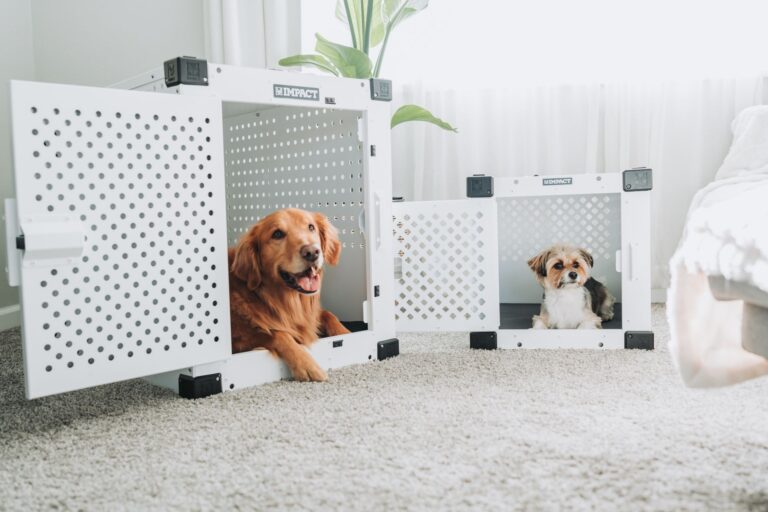
It doesn’t have to be a giant crate or an oversized dog bed. A medium-sized orthopedic bed tucked against a wall works well. So does a crate with the door left open, lined with a soft blanket. Some dogs prefer a covered bed, especially in open-plan apartments where there’s a lot of visual stimulation.
Pick a spot that’s away from the main foot traffic in your apartment. A corner of the bedroom, the side of the couch that nobody really uses, a nook near a bookshelf. Somewhere they can see the room but aren’t in the middle of everything.
Once you pick it, keep it consistent. Dogs are creatures of habit, and knowing where their spot is helps them settle faster and stress less.
Think About the Floor
This sounds boring until your dog slides out of a turn chasing a toy and you realize hardwood floors and dog paws are not a great combination.
Most apartments have hardwood or laminate. It looks great. It’s also hard on joints over time, especially for larger dogs or older ones, and it makes it harder for dogs to feel stable when they move around.
A few strategically placed rugs go a long way. You don’t need to cover every inch of floor. Focus on the paths your dog actually uses: the route from their bed to the front door, the area near the couch, anywhere they tend to land after jumping down from something.
Rugs with a low pile and a non-slip backing are the most practical. Avoid long shag rugs if your dog is a chewer or if you’re trying to keep the space easy to clean. Flatweave rugs are easier to vacuum and tend to hold up better in high-traffic dog zones.
Make the Most of Vertical Space
Floor space in a small apartment is precious, which means it helps to think upward.
Wall-mounted shelves work well for cat owners, but dog owners can use this thinking too. Keep dog supplies off the floor and on shelves or hooks. A simple row of hooks near the door for leashes and harnesses means you’re not hunting for them every time you go out. A basket on a shelf keeps toys accessible without covering the floor in them.
If you use a crate, look at whether it can double as a surface. A crate with a flat top can hold a small plant, a lamp, or a tray of your stuff, which saves you a side table and keeps the crate from feeling like dead space.
The goal is to keep dog-related things organized and off the floor so your apartment still feels like a place you live in, not just a place your dog lives in.
Set Up a Drop Zone Near the Door
After a walk, things get chaotic fast. The leash gets tossed somewhere. The harness ends up on the kitchen counter. Muddy paws track across the floor before you can stop them.
A small drop zone near your front door fixes most of this. It doesn’t have to be fancy. A hook for the leash and harness, a small bin or basket for waste bags and treats, and a mat or towel right at the door for paw wipes.
If your apartment has a small entryway, even better. If it’s a straight shot from the door into your main living space, a mat right at the threshold still helps signal “we pause here before we go in.”
This kind of micro-routine at the door keeps the rest of your apartment cleaner and makes leaving and coming home feel less chaotic for both of you.
Keep Toys Contained (Without Hiding Them All)
Toys scattered across the floor are a small-apartment nemesis. You step on them, they get kicked under the couch, and the place looks like a pet store exploded.
The fix most people land on is a basket. A simple, open-top basket in the corner of the living room holds a good number of toys and keeps them visible enough that your dog can go pick one when they want. You don’t have to stuff every toy in there. Rotating toys works well in small spaces too: keep five or six out at a time and swap others in from a closet every week or two. Dogs treat familiar toys like new ones after a break, so it’s a cheap way to keep them interested without buying more stuff.
The bin doesn’t have to look like a dog toy bin either. A woven basket, a wooden crate, a fabric storage cube. Pick something that fits your space aesthetically and doesn’t scream “dog house” every time someone walks in.
Think About Airflow and Smell
Small spaces concentrate smell faster than big ones. If you have a dog, especially one who gets wet on walks or has that particular dog smell that some breeds carry more than others, you’ll notice it in a small apartment before you would in a house.
A few things help. First, wash the dog bed cover regularly, at least every two to three weeks. That’s usually where most of the smell lives. Second, give the floors a once-over with a pet-safe cleaner a couple of times a week. Third, keep air moving. A small fan or opening windows when weather allows helps more than any air freshener.
Avoid heavy plug-in scents or aerosols near where your dog spends most of their time. Some are fine, but dogs have sensitive noses and strong artificial scents can be irritating. Fresh air and clean surfaces do more than covering smells with something stronger.
Let It Evolve
The first setup you put together probably won’t be the final one. You’ll move the bed twice. You’ll realize the toy basket is in the wrong corner. You’ll find out your dog has strong opinions about where they want to sleep that have nothing to do with what you planned.
That’s fine. Small-space living with a dog is a little bit of trial and a lot of adjust-as-you-go. The goal isn’t to get it perfect on the first try. It’s to build a space where your dog is comfortable and your home still works for you.
Start with the basics: a clear spot for them, a cleaner floor, and some system for the everyday stuff. Then adjust from there.
You’d be surprised how much a few small changes can shift the whole feel of living with a dog in a small space.